

7 Best Tablet Inspection Systems for Pharma Industries
In the pharmaceutical industry, maintaining product quality, safety, and consistency is essential. Tablets must meet strict quality standards before they reach the market. Defects such as cracks, chips, discoloration, broken tablets, incorrect shapes, and surface imperfections can affect product quality and patient safety. To identify these defects efficiently, pharmaceutical manufacturers rely on advanced automatic tablet inspection systems.
A tablet inspection system uses technologies such as machine vision, high-resolution cameras, sensors, and automated image processing to inspect tablets and identify defects during production. These systems help manufacturers improve inspection accuracy, reduce manual intervention, and maintain consistent quality standards.
With increasing production demands and stringent pharmaceutical regulations, choosing the right tablet inspection system has become an important consideration for pharmaceutical manufacturers.
In this blog, we will explore seven types of tablet inspection systems, their key features, and how they support pharmaceutical quality control.
What Is a Tablet Inspection System?
An tablet inspection system is a specialized machine designed to examine tablets for visible defects and quality inconsistencies during pharmaceutical manufacturing. Depending on its design, the system can inspect tablet appearance, dimensions, shape, color, surface quality, and other specified characteristics.
Unlike manual inspection, automated systems can process large quantities of tablets with consistent inspection criteria. Many systems use machine vision and artificial intelligence (AI)-based image analysis to detect defects and separate nonconforming products from acceptable tablets.
These systems can be integrated into tablet production lines or used as standalone inspection equipment, depending on the manufacturer’s requirements.
Top 7 Best Tablet Inspection Systems for Pharma Industries
Different tablet inspection systems serve different production and quality-control needs. The following seven categories represent commonly used automated inspection approaches in pharmaceutical manufacturing. The most suitable option depends on production volume, tablet characteristics, inspection requirements, and integration needs.
1. BRAHMI Automatic Tablet & Capsule Inspection Machine
Technical Data
- Overall dimensions: 1250 mm (L) x 1100 mm (W) x 1800 mm (H).
- Electrical supply: 220 – 440V Three phase 50 / 60 Hz.
- Compressed air: 6 bar
- Equipped with 8 high-resolution industrial vision cameras.
- High speed independent image processing controllers.
- Inspection speeds up to 150,000 pills/hour, subject to product size and inspection parameters; customisation available
- Construction: SS304, product contact parts in SS316 / FDA approved food-grade material.
- 21.5” capacitive touchscreen Graphic User Interface (HMI).
- Weight: 780 kg.
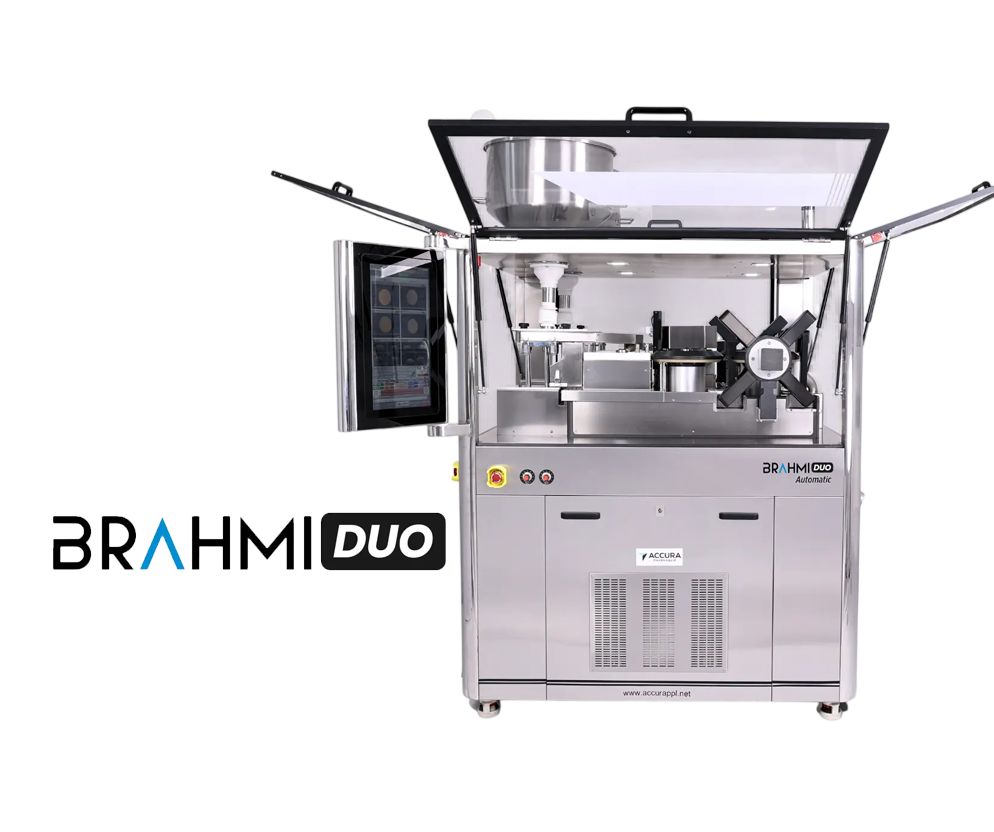
2. BRAHMI DUO Automatic Tablet and Capsule Inspection Machine
Technical Data
- Overall dimensions: 1250 mm (L) x 1100 mm (W) x 1800 mm (H)
- Electrical supply: 220 – 440V Three phase 50 / 60 Hz
- Compressed air: 6 bar
- Equipped with 8 high-resolution industrial vision cameras
- High speed independent image processing controllers
- Inspection speeds up to 150,000 pills/hour, subject to product size and inspection parameters; customisation available
- Construction: SS304, product contact parts in SS316 / FDA approved food-grade material
- 21.5” capacitive touchscreen Graphic User Interface (HMI).
- Weight: 780 kg.
3. NETRA VS6 Automatic Tablet & Capsule Inspection Machine – H3
Technical Data
- Overall dimensions: 1900 mm (L) x 1050 mm (W) x 2140 mm (H).
- Electrical supply: 100 – 230V single phase 50 / 60 Hz
- Compressed air: 4 bar
- Equipped with 6 high-resolution industrial vision cameras
- High speed independent image processing controllers
- Inspection speeds up to 100,000 pills/hour, subject to product size and inspection parameters
- Product contact parts made of SS 316L and non-contact parts made of SS 304
- 21.5” capacitive touchscreen Graphic User Interface (HMI)
- Weight: 1300 kg
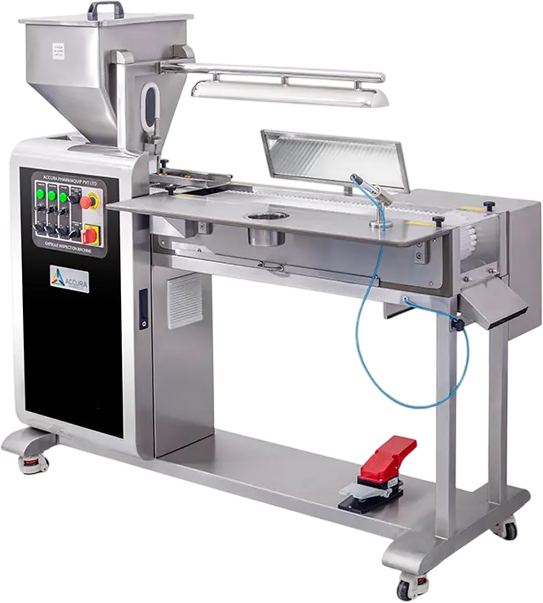
4. Q1P Tablet & Capsule Inspection Machine (Premium)
Technical Data
- Electrical supply: 100V-220V, AC 50/60 Hz Single Phase
- Overall dimensions: 1650mm (L) x 775mm (W) x 1500mm (H)
- Compressed Air: 4 bar
- Main Hopper Capacity: 38 litres
- Inspection Belt: Roller Conveyor system
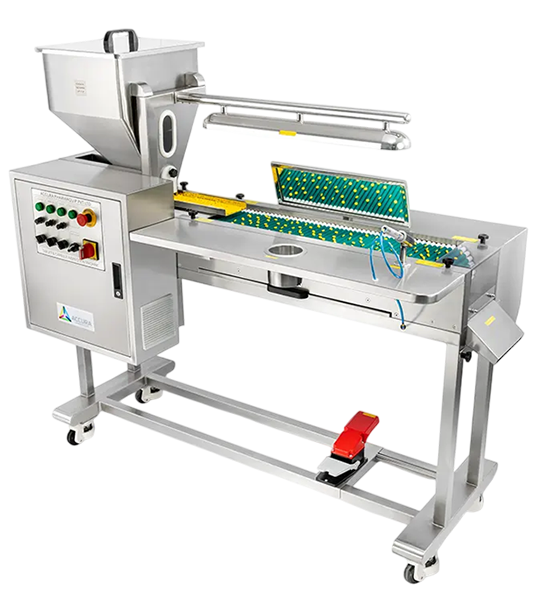
5. QSI - Tablet & Capsule Inspection Machine (Standard)
Technical Data
- Electrical supply: 100V-220V, AC 50/60 Hz Single Phase
- Overall dimensions: 1650mm (L) x 775mm (W) x 1500mm (H)
- Compressed Air: 4 bar
- Main Hopper Capacity: 38 litres
- Inspection Belt: Roller Conveyor system
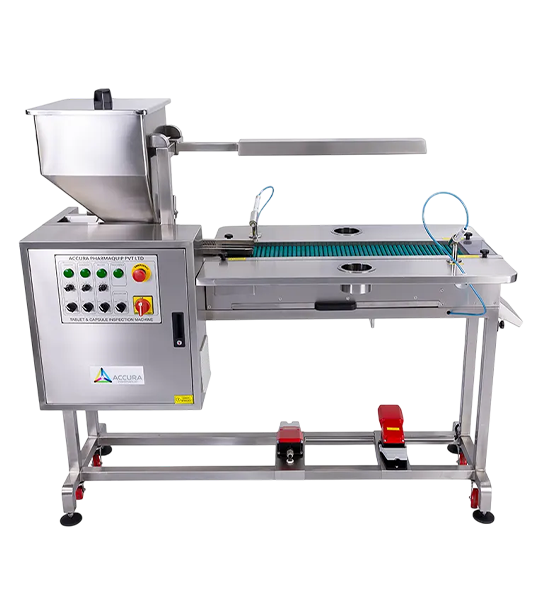
6. QSII Tablet & Capsule Inspection Machine (double operator)
Technical Data
- Model No.AP-TCI
- Conveyor Drive1/4 HP Geared Motor
- Conveyor Speed Regulator0.4 KW / 220 V AC Drive
- Vibrator230 V AC with Regulator
- Output capacity up to 1,50,000 Tablets / Capsules Per Hour
- Power Supply230V, 50Hz AC
- Roller Drive1/4 HP Geared Motor
- Roller Speed Regulator0.4 KW / 220 V AC Drive
- IlluminatorElectronic Choke Tubelight
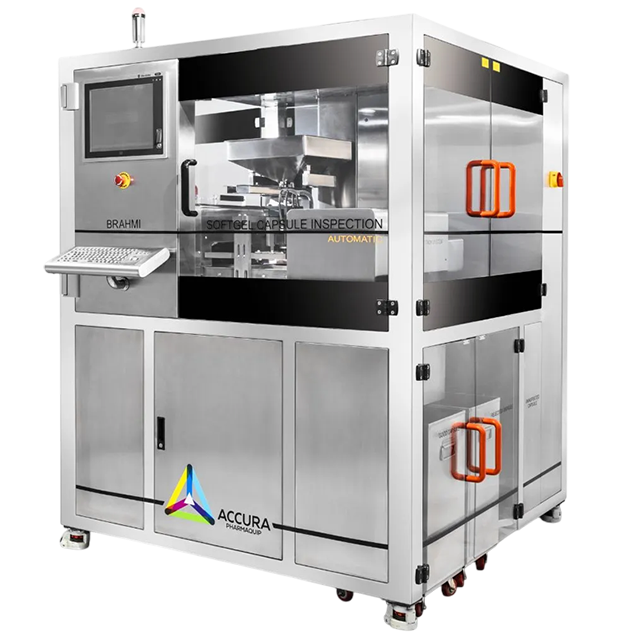
7. Soft-Gel Capsule Inspection Belt & Visual Inspection Machine
Technical Data
- Overall dimensions: 1550 mm (L) x 1250 mm (W) x 1800 mm (H).
- Electrical supply: 100-220 V Single phase 50 / 60 Hz
- Compressed air: 6 bar
- Equipped with 6 high-resolution industrial vision cameras.
- High speed independent image processing controllers.
- Inspection speeds up to 250,000 capsules/hour, subject to product size and inspection parameters; customisation available.
- Construction: SS304, product contact parts in SS316 / FDA approved food-grade material
- 21.5” capacitive touchscreen Graphic User Interface (HMI)
- Weight: 485 kg
Key Factors to Consider When Choosing a Tablet Inspection System
Selecting the right tablet inspection system requires evaluating production needs, inspection objectives, and equipment capabilities. Consider the following factors before making a decision.
1. Inspection Accuracy
Choose a system capable of identifying the defects relevant to your products. Ask for performance data under representative operating conditions and verify the system using suitable defect samples.
2. Production Capacity
The inspection system should accommodate the required production throughput without creating bottlenecks. Evaluate its rated capacity and actual performance with your tablet sizes, shapes, and operating conditions.
3. Defect Detection Capabilities
Identify which defects the equipment can detect, such as cracks, chips, spots, coating irregularities, discoloration, or dimensional deviations. Confirm whether the required tablet surfaces can be inspected.
4. Automation and Integration
Consider whether the equipment can integrate with existing production lines, tablet handling systems, rejection mechanisms, and manufacturing data systems.
5. Data Recording and Traceability
For regulated pharmaceutical manufacturing, review the system’s capabilities for recording inspection results, user actions, alarms, and rejection events. Where electronic records are required, assess applicable controls and validation requirements.
6. Cleaning and Maintenance
The equipment should support the manufacturer’s cleaning procedures and product changeover requirements. Consider ease of access, maintenance needs, spare-part availability, and technical support.
7. Compliance and Validation Support
Evaluate documentation, calibration, qualification, and validation support. Applicable requirements depend on the manufacturing location, product, and intended use of the equipment.
Benefits of Tablet Inspection Systems
Tablet inspection systems offer several advantages for pharmaceutical manufacturers.
- Consistent quality control: Standardized inspection criteria help reduce variability associated with manual inspection.
- Improved production efficiency: Automated inspection can reduce inspection bottlenecks and manual sorting requirements.
- Faster defect identification: Systems can identify specified defects during production, enabling timely intervention.
- Reduced human error: Automation reduces reliance on visual judgment alone.
- Better quality documentation: Compatible systems can record inspection results and defect trends.
- Reduced product waste: Early detection and targeted rejection can help prevent defective products from progressing further through production.
Actual results depend on the equipment, product characteristics, inspection settings, and manufacturing process.
Conclusion
Tablet inspection systems play an important role in pharmaceutical quality control by helping manufacturers identify defects, improve inspection consistency, and maintain production efficiency. From machine vision and AI-powered inspection to surface analysis, dimensional measurement, and integrated rejection systems, each approach serves specific manufacturing requirements.
Before investing in a system, manufacturers should assess defect detection capabilities, inspection throughput, tablet compatibility, integration requirements, data management, and validation support.
Choosing the right tablet inspection system can help pharmaceutical manufacturers strengthen quality assurance and support reliable, efficient tablet production.
Frequently Asked Questions
Q1. What is an automatic tablet inspection system?
An automatic tablet inspection system uses cameras, sensors, and image-processing technology to detect tablet defects and maintain product quality.
Q2. What defects can a tablet inspection system detect?
It can detect cracks, chips, discoloration, surface spots, coating defects, and shape irregularities, depending on the system’s capabilities.
Q3. What are the benefits of automatic tablet inspection systems?
These systems improve inspection consistency, reduce manual labor, increase production efficiency, and help identify defective tablets.
Q4. How does an AI-powered tablet inspection system work?
It uses AI algorithms and image analysis to identify and classify tablet defects based on trained models and predefined inspection criteria.
Q5. How do I choose the best tablet inspection system?
Consider inspection accuracy, production capacity, defect detection capabilities, automation, integration, and validation requirements.
Q6. Are automatic tablet inspection systems suitable for pharmaceutical industries?
Yes. They support pharmaceutical quality control by helping manufacturers inspect tablets consistently and identify nonconforming products before packaging.
